
Substack Library
GlossaryThe Cage Fight for Capital
October 30, 2026The vast majority here in France desires only to be allowed to work in orderly conditions.
-Monsieur de Norpois in Proust’s Remembrance of Things Past, 1921.
Not investment advice.
The companies that once spouted free cash flow, which was then used to buy back stock, now want our money to absorb their newly issued stocks and bonds, and fund cash-flow-negative investments.
The market is wary for several reasons:
-
the sheer volume of capital that needs to be raised,
-
the financing structures used to do so are as complex as those that funded the housing bubble,
-
and because a shift to the left in Washington may slow data center construction.
If the financing slows, it creates a cascade of self-reinforcing forces. Falling stock prices widen credit spreads, which slows financing, which leads to falling stock prices. Recognize that this is global. Not only are data centers getting built in North America, they are also a significant upward economic pressure in the UK, Argentina, New Zealand and many other places.
After today, the S&P 500 will still be up about 8% this year.
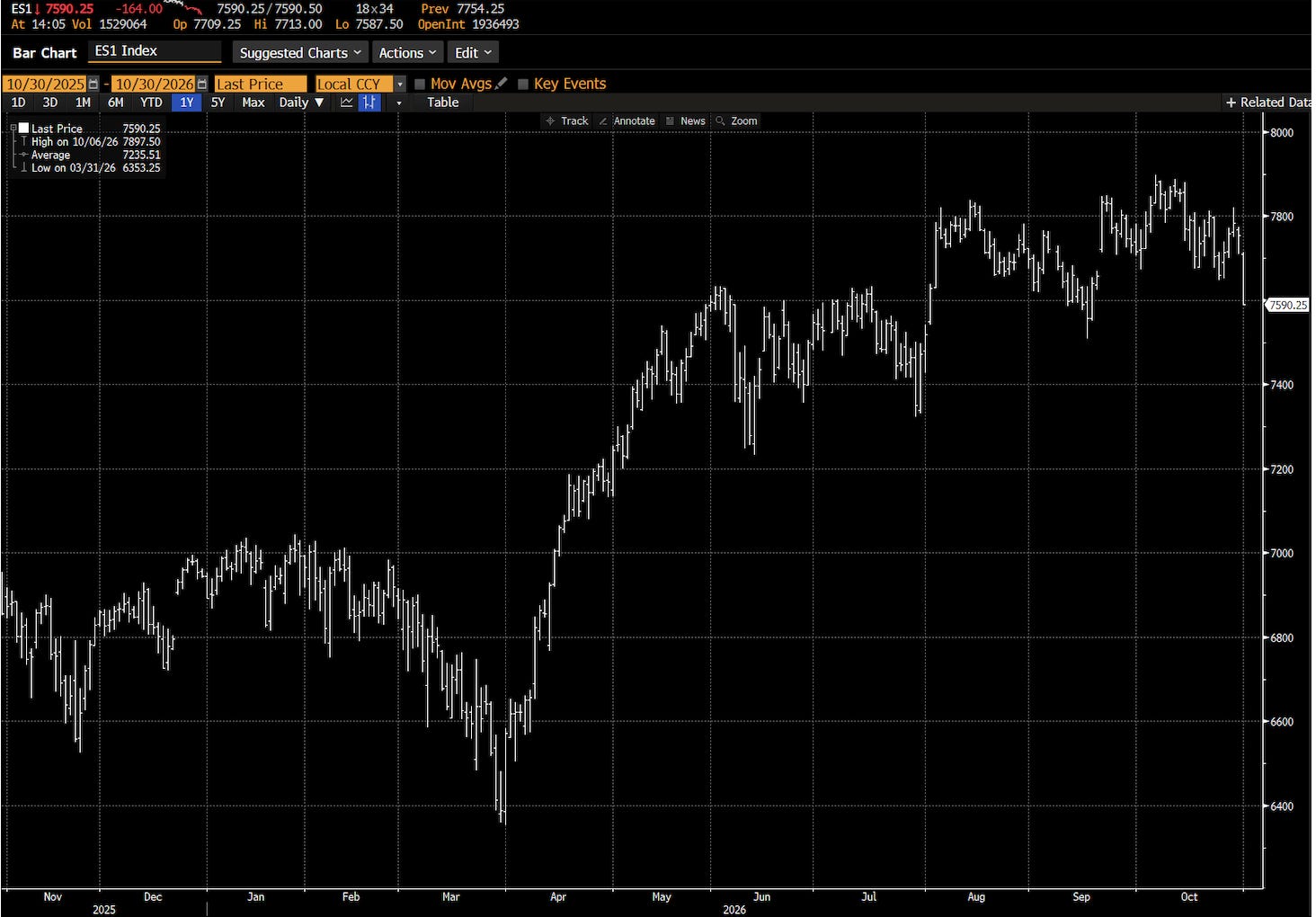
The S&P is up because earlier this year a small number of stocks went vertical. The attribution is below.
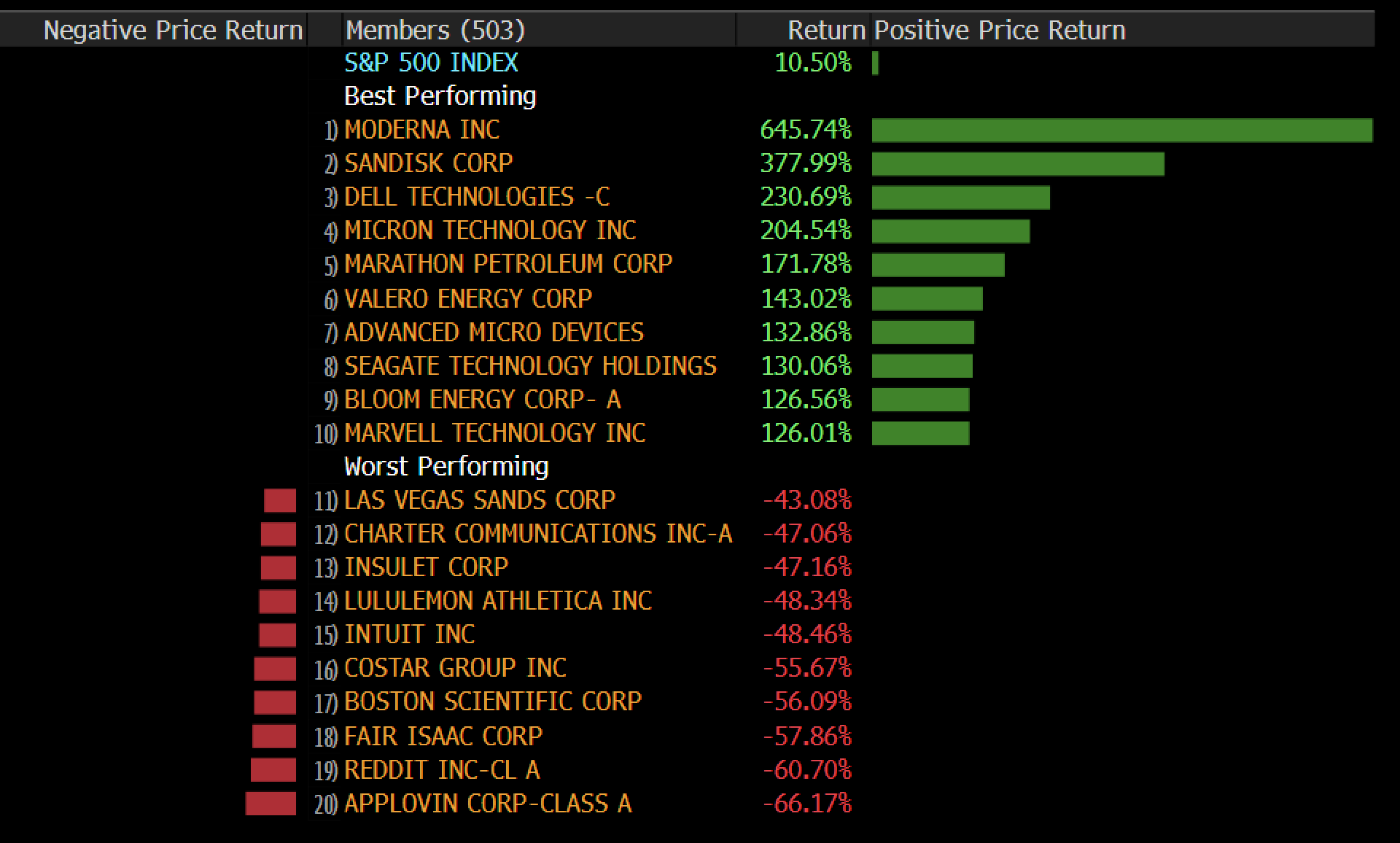
The cage fight for capital pushed up the SanDisks and Dells. The richest guys in the world take huge bets, stomach volatility, and win. The magic chalice is the singularity, which they believe is at hand. But the singularity is expensive, and there are too many players in the room. For instance, I suspect Musk will try to use his balance sheet to take out his sworn enemy Sam Altman at OpenAI. This week Meta announced a stock and bond offering that was purportedly oversubscribed, but the stock fell. Amazon and Google modestly missed earnings and went more cash flow negative. Musk recently said he had raised $40B for SpaceX, but when fact-checked, that turned out not to be entirely true.
The protagonists, both bulls and bears, are not accurate reporters, which makes discerning the truth difficult. Musk said the cost of a unit of intelligence is going up, not down, and that the useful life of GPUs is longer than widely known. But given he is in the middle of a capital raise, he would say that. Bears like Michael Burry, of The Big Short fame, claim that circular financing is based on bogus chip depreciation. But the chips do seem to have a longer useful life, so his facts don’t hold up, either.
What we do know is that the financing is, as Soros would say, reflexive. If stocks go up, the financing is easy. If stocks go down, the financing becomes much more challenging, and slower demand makes the stocks go down further.
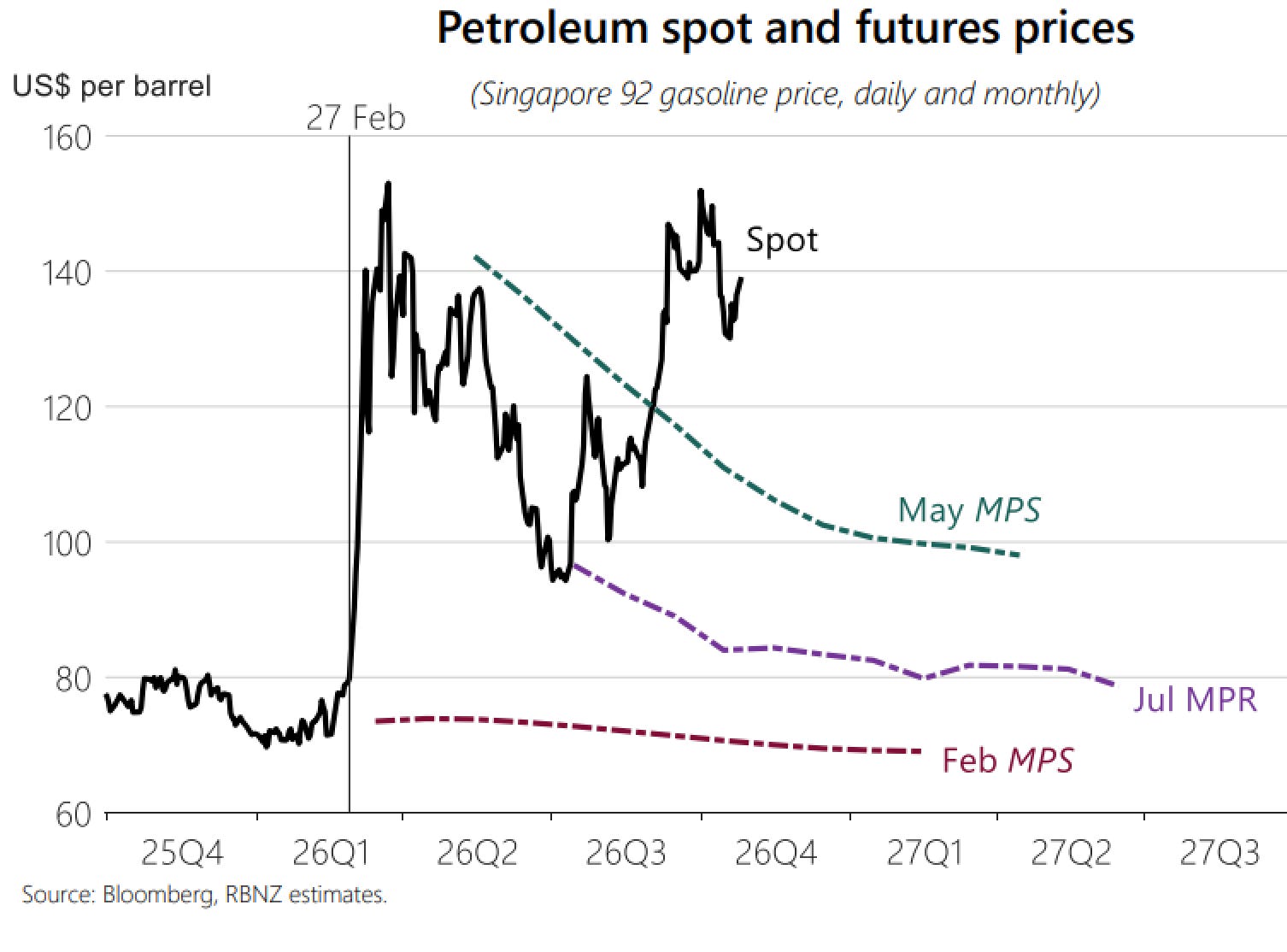
Add to this that inflation is high, so central banks are tightening even as momentum in the stock market is fading, and of course there is the US election and a possible attack on Iran. The below chart is from the Reserve Bank of New Zealand. It shows their faulty forecast of oil (Feb, May and July estimates) against the actual price of oil. Central banks are navigating an oil shock, further tightening liquidity. That’s also why gold is falling.
Put together, it is all quite bearish.