Substack Library

Glossary

The Clearing Price

Not investment advice.


Man, being the schmuck he is, will get used to anything.

Crime and Punishment, Dostoyevsky, 1866.


A few things are shifting in the story.

  1. The US swing toward authoritarianism has been stopped.

  2. The swing back to the center solves one problem (breakdown of rule of law), but creates another—how to turn a collective hatred of inflation (which in part decided the election) into an economic plan? Part of the election platform—data centers are bad—hit a reality wall Wednesday when stocks fell sharply on fears of exactly that. Around half of voters have 401(k)s and don’t want the market to tank, and the data center build is a key part of the valuation of the stock market.

  3. The US deficit is around 6% of GDP. If tariffs are rescinded or reduced, spending on Medicare increased, tax increases are proposed but vetoed and data center spending slows, the deficit will widen, driving long-term yields up and further pressuring P/Es on the stock market down.

  4. The US economy is strong, and unemployment is low and inflation is high, in part because of robust credit creation. As a result, the Fed needs to tighten rates. This is mostly independent of oil prices. The kinetic part of the war might be over or close to over since domestic support for such activity is tepid.

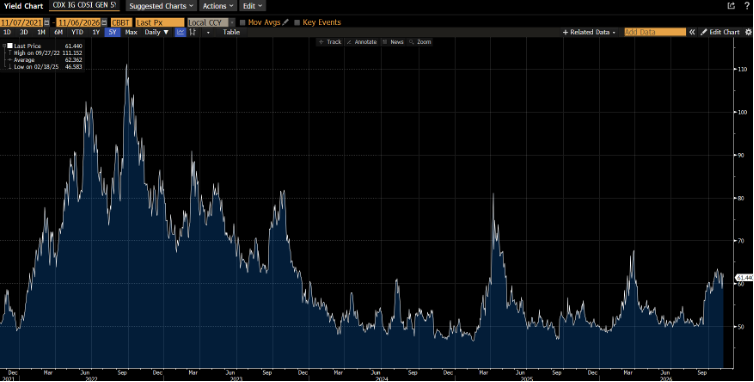
  5. This tightening of money is occurring at a time when demand for money is high. This pressures the cost of capital higher, as you can see below (investment-grade spreads), which then squeezes the weakest borrowers.
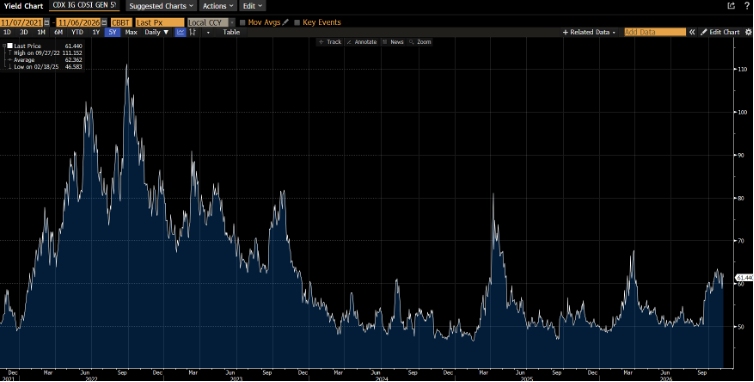
    Source: Bloomberg, November 6, as are the other charts and data.
  6. The parts of the economy that are not part of the boom face both higher inflation and higher borrowing costs and understandably don’t like either, thus the vote.

  7. Because stocks are selling off and the regulatory regime is in flux, forward prices for parts of the boom, like, say, Korean memory maker SK Hynix, are at their lowest level in years, 3. On the other hand, in 2008, the P/E fell to 1.5 times, which would be 50% lower from here.
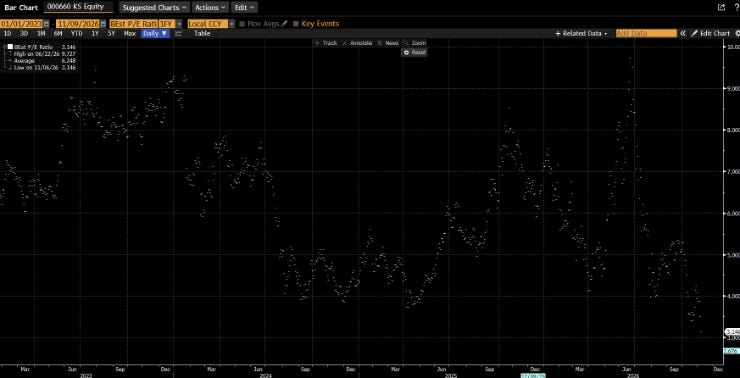
  1. Numbers, like P/Es or free cash flow yield, are only a guide to when the selling is done. There is a psychological element as well, when investors “give up.” Such a thing has happened, for instance, with fiber companies or home builders after previous busts. Will investors who have been trained and rewarded to always buy tech continue to do so? SK Hynix is down 63% from its June high, but these stocks often overreact on the downside.
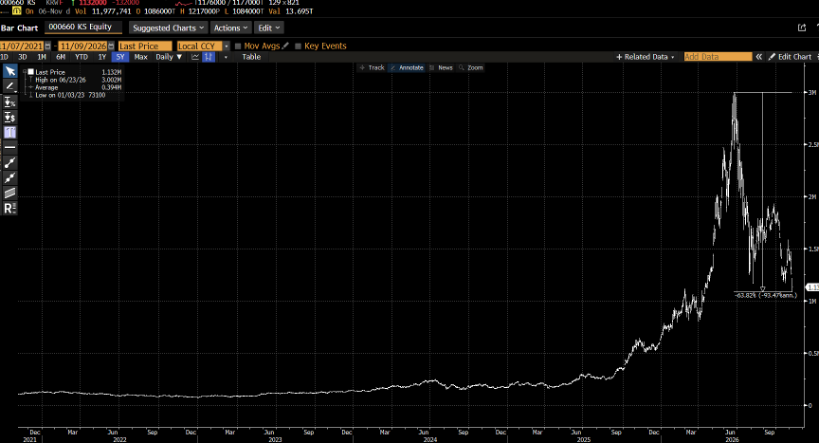
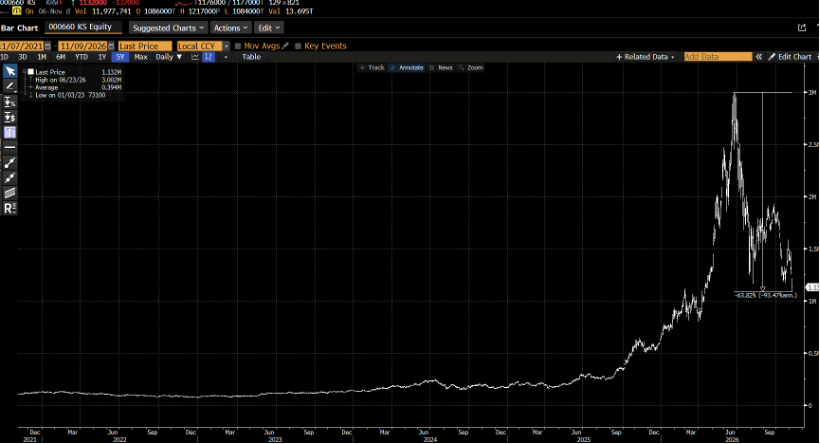
In sum, we are trying to find a price level where stocks and bonds can clear the capital market. We do not appear to be there yet, though we are closer, suggesting, in the US, higher bond yields and lower stock prices.


This document is strictly confidential and is intended for authorized recipients of “A Letter from Paul” (the “Letter”) only. It includes personal opinions that are current as of the date of this Letter and does not represent the official positions of Kate Capital LLC (“Kate Capital”). This letter is presented for discussion purposes only and is not intended as investment advice, an offer, or solicitation with respect to the purchase or sale of any security. Any unauthorized copying, disclosure, or distribution of the material in this presentation is strictly forbidden without the express written consent of Paul Podolsky or Kate Capital LLC.
If an investment idea is discussed in the Letter, there is no guarantee that the investment objective will be achieved. Past performance is not indicative of future results, which may vary. Actual results may differ materially from those expressed or implied. Unless otherwise noted, the valuation of the specific investment opportunity contained within this presentation is based upon information and data available as of the date these materials were prepared.
An investment with Kate Capital is speculative and involves significant risks, including the potential loss of all or a substantial portion of invested capital, the potential use of leverage, and the lack of liquidity of an investment. Recipients should not assume that securities or any companies identified in this presentation, or otherwise related to the information in this presentation, are, have been or will be, investments held by accounts managed by Kate Capital or that investments in any such securities have been or will be profitable. Please refer to the Private Placement Memorandum, and Kate Capital’s Form ADV, available at www.advisorinfo.sec.gov, for important information about an investment with Kate Capital.
Any companies identified herein in which Kate Capital is invested do not represent all of the investments made or recommended for any account managed by Kate Capital. Certain information presented herein has been supplied by third parties, including management or agents of the underlying portfolio company. While Kate Capital believes such information to be accurate, it has relied upon such third parties to provide accurate information and has not independently verified such information.
The graphs, charts, and other visual aids are provided for informational purposes only. None of these graphs, charts, or visual aids can of themselves be used to make investment decisions. No representation is made that these will assist any person in making investment decisions and no graph, chart or other visual aid can capture all factors and variables required in making such decisions.