
Substack Library
GlossaryThe Flow of Money
July 31, 2026Not investment advice.
Here is the flow.
-
The big-name companies—Google, Amazon, and others—spend their profits to build large structures that the rest of us use to do our work, like spell-checking this post. Until Amazon reported Thursday, the going assumption was that the return on this massive investment was negative. Amazon quantified the gains, and now we know the ROIC is solidly positive. That’s good.
-
This AI spending does three things at once: it creates issuance (debt and equity) to fund the spending; the spending itself creates economic growth and transfers that money from the spender’s wallet (Amazon) to the receiver’s wallet—like SK Hynix in Korea, whose technology allows the models to remember what they have already told us. That funding–spending–receiving machine is on automatic pilot until demand is satisfied and puts upward pressure on the cost of capital. Regarding demand, all we know is that we are using a lot of compute, but a bit like taking endless photographs with your phone versus paying for a camera, the demand might be pretty darn high if costs keep coming down.
-
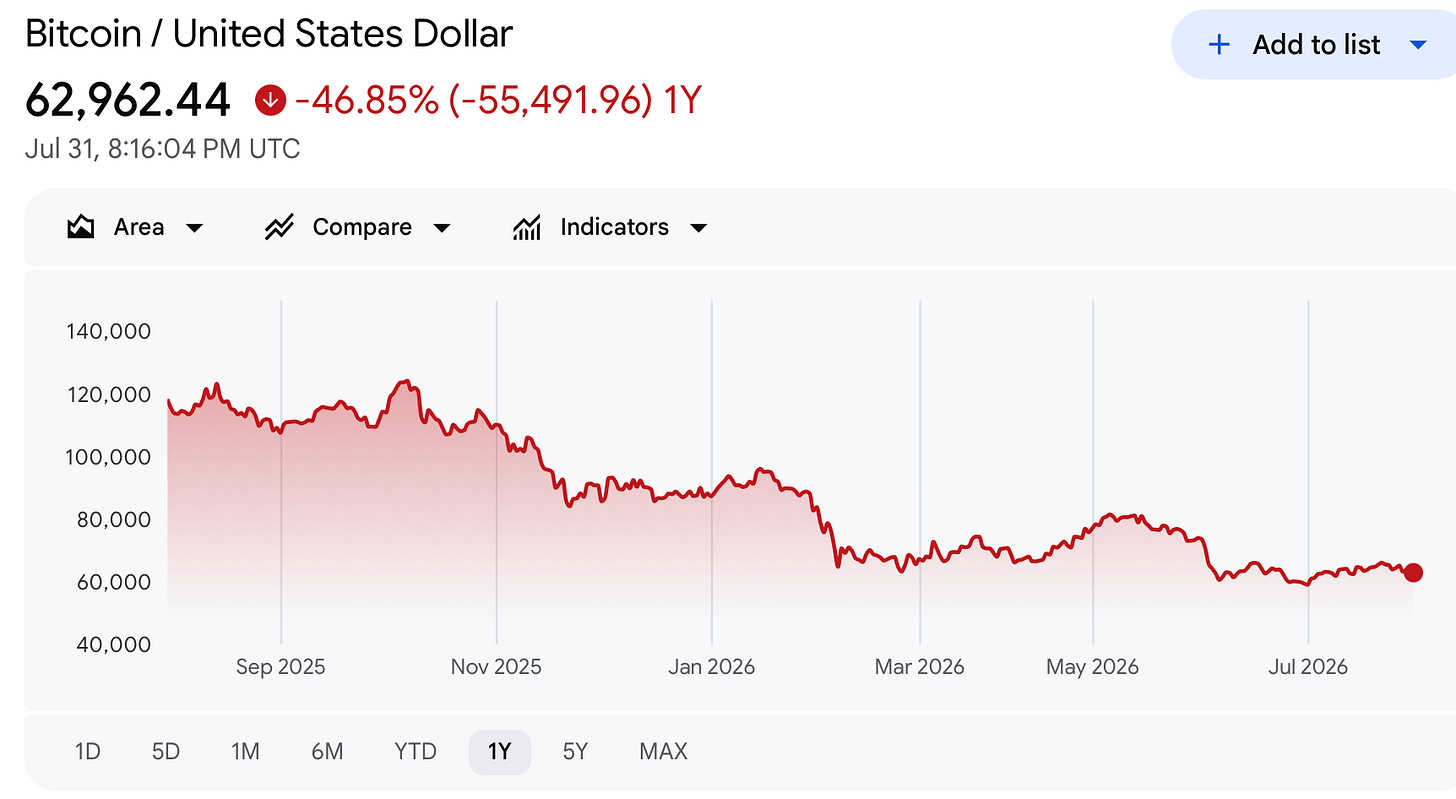
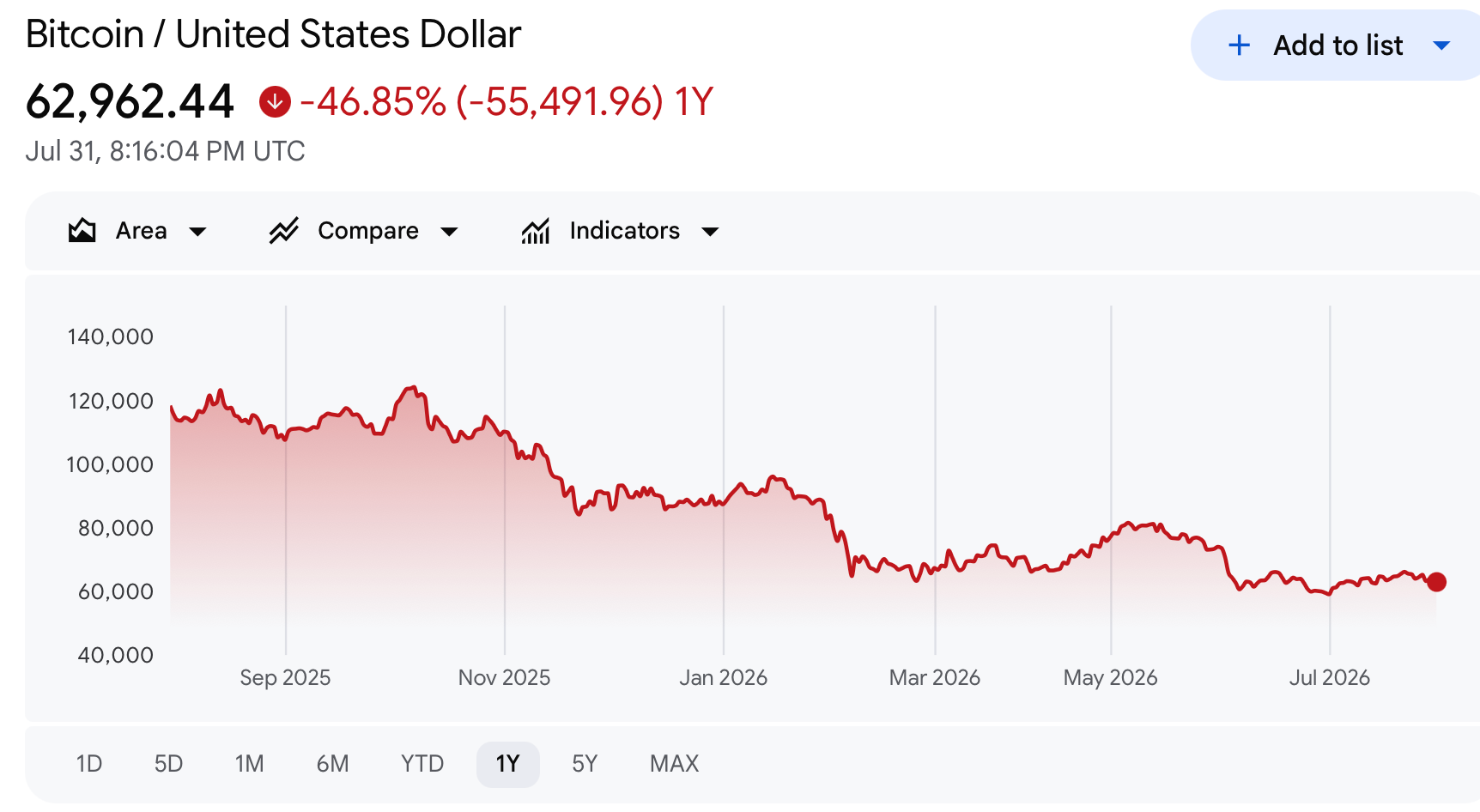
Higher real yields draw money out of risky assets. Bitcoin got whacked, then gold; stocks are perhaps next. Not all stocks, but expensive stocks. Indexes can deliver poor returns while individual stocks produce either great or awful ones.
-
It is getting harder to keep up with who is attacking whom. On Wednesday a U.S. natural-gas storage tanker was hit in Egypt, apparently by a drone; Iran has not officially claimed responsibility. It could be a proxy, of which there are now the Houthis, Hezbollah, and different groups in Iraq. The war is expanding and more drawn out. Ship traffic has recovered only marginally, and we are now well past even the most pessimistic estimates of how long the closure would last. Forward oil prices have risen 20% this month but remain at the levels they were in March. Supply is tight, creating a windfall for producers and redistributing capital from consumers to producers. For those in the shipping business, these are boom times. The possibility of a sharp spike higher in bond prices that then hits bond yields and then hits stocks is real.
-
A tightening cycle. AI spending plus government deficits (U.S. finances increasingly look like Brazil’s) create pressure to tighten, which can further disrupt markets.
-
Episodic acute deleveraging. Much of this month’s asset performance was driven by the unwind of a single highly leveraged investor. As some commentators have noted, in past blow-ups the assets at the center of the issue either took a long time to recover or simply didn’t recover. I found it interesting that some of the hot stocks rose briefly Thursday but closed quite weak on Friday.
To fit these into one portfolio requires:
-
Being short the bonds of the governments doing the overspending.
-
Being long the bonds of those outside the boom, but in smaller size.
-
Being long the stocks of the companies that receive the government spending or the oil windfall or are capitalizing on the new technology.
-
Being short the stocks that are priced as if they are receiving the spending but are not.
-
Being long the currencies of the countries at the center of the boom and short those that are distant from it.
It is possible that a balanced portfolio ends the year negative and that stock-market indexes finish sideways or lower from here.